
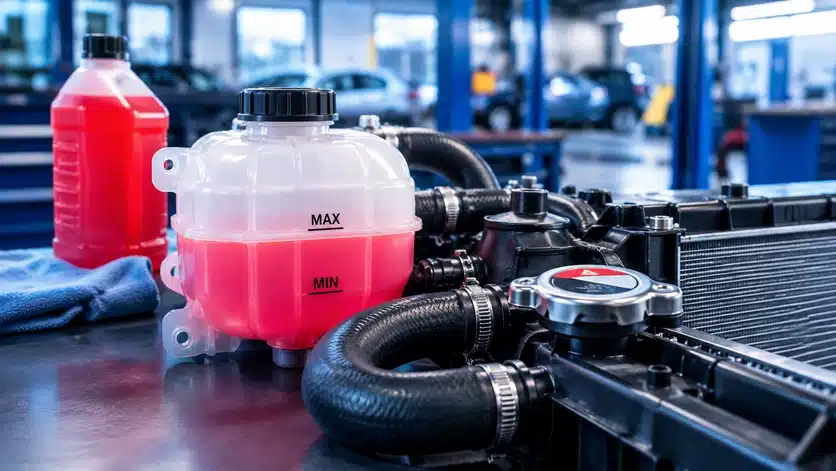
Your engine produces a lot of heat while running. Without proper cooling, this heat can damage engine parts and lead to costly repairs. Engine coolant helps control this heat and keeps your engine working as it should.
Coolant is also known as antifreeze. It helps protect your engine in both hot and cold weather. Over time, however, coolant can lose some of its protective properties. Regular maintenance helps keep your cooling system in good shape.
Whether you’re preparing for an Alberta winter or driving in summer heat, it’s important to understand how coolant works. Knowing when to replace it can help you avoid problems and protect your vehicle.
What Is Engine Coolant and How Does It Work?
Engine coolant is a liquid that moves through your engine and cooling system. It carries heat away from the engine and helps control its temperature.
Most coolants contain glycol and water. They also include additives that help protect the system from rust and corrosion.
Here’s how the process works:
- The engine produces heat as it runs.
- Coolant absorbs heat from the engine.
- The hot coolant flows to the radiator.
- The radiator releases heat into the air.
- The cooler fluid returns to the engine.
This cycle helps keep the engine within its normal temperature range.
Engine coolant also provides other important benefits:
- Controls heat: Helps prevent the engine from overheating.
- Prevents freezing: Protects the cooling system in cold weather.
- Raises the boiling point: Helps reduce the risk of boiling when used at the correct mixture.
- Fights corrosion: Helps protect metal parts inside the cooling system.
- Protects key parts: Helps maintain the radiator, water pump, and engine cooling passages.
Using the correct coolant is important. The right type and mixture help the system work as designed.
How Coolant Protects Your Engine in Summer and Winter
Your cooling system works all year. It needs to handle both hot summers and cold winters.
During summer
Hot weather can put extra stress on your cooling system. Heavy traffic, steep hills, and towing can also raise engine temperatures.
Coolant carries heat from the engine to the radiator. The radiator then releases that heat into the air.
If coolant levels are low, the engine may overheat. A leak or a faulty cooling system part can also cause this problem. Driving an overheated vehicle can lead to serious engine damage.
During winter
Coolant must also protect your vehicle in freezing weather. The correct mixture helps prevent the fluid from freezing inside the cooling system.
Coolant additives also help protect parts from rust and corrosion. Using plain water or the wrong coolant can reduce this protection.
In Alberta, temperatures can change sharply between seasons. Checking your coolant before extreme weather arrives is a smart way to prepare your vehicle.
What Happens When Coolant Gets Old?
Coolant does not last forever. Over time, heat and normal use can reduce the strength of its protective additives.
As coolant ages, it may become less effective at protecting your engine and cooling system.
Rust and corrosion may develop
Coolant contains additives that help protect metal parts. As these additives weaken, parts inside the cooling system may become more prone to rust and corrosion.
Corrosion can damage components and contribute to leaks. It may also affect how well the system removes heat.
Dirt and deposits can build up
Dirt and deposits may collect inside the cooling system over time. These can restrict coolant flow or reduce heat transfer.
Coolant that looks rusty, cloudy, oily, or dirty should be checked by a technician. Simply adding more fluid may not solve the problem.
Freeze protection may decrease
The correct coolant mixture helps protect against freezing and boiling. An incorrect mixture may not provide enough protection.
Adding too much water can change how the coolant performs. Using the wrong product can also cause problems.
Always use the coolant type and mixture recommended by your vehicle’s manufacturer.
Cooling system problems may develop
Old coolant does not mean your engine will fail. However, neglected maintenance can reduce protection and allow problems to go unnoticed.
Follow your vehicle’s maintenance schedule to help protect the cooling system. Regular checks can also help identify leaks and other issues early.
Why the Correct Coolant Matters for Your Vehicle
Not all engine coolants are the same. Different vehicles may need different coolant formulas.
These formulas contain different additives to protect the materials used in each cooling system. Some coolants may not be compatible with others.
Using the wrong type can reduce protection or cause other problems. Mixing incompatible products may also affect how the coolant works.
Before adding or replacing coolant, check your owner’s manual. It will identify the required coolant specification.
If you’re unsure which product to use, ask a qualified technician.
Don’t choose coolant based on colour alone. Different formulas can have the same colour. Colour does not reliably tell you whether a coolant is suitable for your vehicle.
The safest choice is a product that meets your manufacturer’s requirements.
Coolant Flush vs. Coolant Top-Up: What’s the Difference?
Topping up coolant and flushing the system are two different services. Each serves a different purpose.
Coolant top-up
A top-up adds coolant when the level is too low. It may be suitable if the level has dropped slightly and there is no sign of a larger problem.
Always use the correct coolant and follow your owner’s manual.
A sealed cooling system should not keep losing coolant. If the level drops again and again, have the vehicle checked for leaks or other faults.
Cooling system flush
A coolant flush replaces old coolant with fresh fluid. Depending on the service, it may also help remove dirt and deposits from the system.
Lube City offers a radiator coolant system flush. The service includes flushing the cooling system and refilling it with approved coolant. Ask your local location about the service details and your vehicle’s requirements.
A flush is not always needed when the coolant level is low. The right service depends on the vehicle, coolant condition, service history, and manufacturer’s schedule.
Learn more about Lube City’s available options on the cooling system and vehicle maintenance services page.
How Often Should You Replace Engine Coolant?
There is no single coolant replacement schedule for every vehicle. The right interval depends on several factors:
- Your vehicle’s make, model, and year
- The type of coolant it uses
- The manufacturer’s maintenance schedule
- Your driving conditions
- The condition of the cooling system
- When the coolant was last replaced
Some vehicles need new coolant after a set number of years or kilometres. Others follow a different schedule.
Check your owner’s manual for the correct interval. Do not rely on a general recommendation if your vehicle has specific requirements.
If you don’t know when the coolant was last changed, check your service records. A technician can also help you decide whether the system needs attention.
Other vehicle fluids need regular care, too. Read our guide on what happens if you don’t change your transmission fluid to learn why transmission maintenance matters.
What Should You Do If Your Engine Overheats?
Never ignore an overheating engine. High temperatures can cause serious damage if you keep driving.
Watch for these warning signs:
- The temperature gauge rises above its normal range.
- A coolant temperature warning light appears.
- Steam comes from under the hood.
- The engine suddenly loses power.
If your vehicle starts to overheat, follow these steps:
- Pull over somewhere safe as soon as possible.
- Turn off the engine when it is safe to do so.
- Follow the instructions in your owner’s manual.
- Let the engine cool completely before checking anything.
- Get roadside assistance if needed.
Never open the radiator cap or a pressurized coolant reservoir while the engine is hot. Hot coolant can escape under pressure and cause severe burns.
Low coolant is only one possible cause of overheating. A faulty thermostat, water pump, radiator, or cooling fan may also be responsible.
Adding coolant will not fix every cooling system problem. If the engine overheats again, have the vehicle inspected before continuing to drive.
How to Keep Your Cooling System in Good Condition
A few simple habits can help you maintain your cooling system.
Check the coolant level safely. Let the engine cool completely before checking the reservoir. Follow the instructions in your owner’s manual.
Look for leaks. Puddles under your vehicle or a falling coolant level may point to a problem. Have recurring coolant loss checked.
Use the correct coolant. Always follow the manufacturer’s specifications. Do not mix different products unless their compatibility has been confirmed.
Follow the service schedule. Coolant does not last forever, even if your engine temperature seems normal.
Watch for warning lights. Take overheating warnings seriously. Arrange an inspection if the warning returns.
Keep service records. Record when the coolant was checked or replaced. This makes it easier to plan future maintenance.
These habits work well alongside other routine services, such as oil changes and filter replacements.
If you’re reviewing your engine oil maintenance, read our guide to synthetic vs. conventional oil. It explains how the two oil types differ and why the correct oil matters.
Protect Your Engine With Regular Coolant Maintenance
Engine coolant helps control temperature and protect your vehicle’s cooling system. It works in every season, from freezing winter mornings to hot summer days.
The key is to use the correct coolant and follow your vehicle’s maintenance schedule. You should also watch for leaks, low fluid levels, and signs of overheating.
Lube City offers a radiator coolant system flush as part of its vehicle maintenance services. If you’re unsure whether your vehicle needs this service, ask the team about the right options for your vehicle.
Ready to maintain your cooling system? Find a Lube City location near you to explore available services.
Frequently Asked Questions
What does engine coolant do?
Engine coolant carries heat away from the engine. It also helps prevent freezing and boiling and protects cooling system parts from corrosion.
How often should engine coolant be changed?
The correct interval depends on your vehicle and the type of coolant it uses. Check your owner’s manual for the recommended schedule.
Can I use water instead of engine coolant?
Water alone does not provide the same freeze protection or corrosion protection as the correct coolant mixture. Use the product recommended by your vehicle’s manufacturer. In an emergency, follow your owner’s manual and seek professional advice.
Is a coolant flush the same as adding coolant?
No. A top-up restores the fluid level. A coolant flush replaces old fluid and may help remove deposits, depending on the service.
What happens if I never replace my coolant?
Over time, coolant additives can weaken. This may reduce corrosion protection and allow deposits to form. The effects depend on your vehicle and the condition of the coolant.
Why does my coolant level keep dropping?
A falling coolant level may point to a leak or another cooling system problem. Have the cause checked instead of repeatedly adding more coolant.
Can I check coolant when the engine is hot?
Never open a radiator cap or pressurized coolant reservoir when the engine is hot. The fluid can escape under pressure and cause serious burns. Wait until the engine has cooled completely and follow your owner’s manual.